
Evaluating the Use of Prescribed Fire to Rejuvenate Forage Pastures and its Impact on Soil Health
Overview
Status: In Progress
Project Timeline: January 2024 – March 2027
Objectives
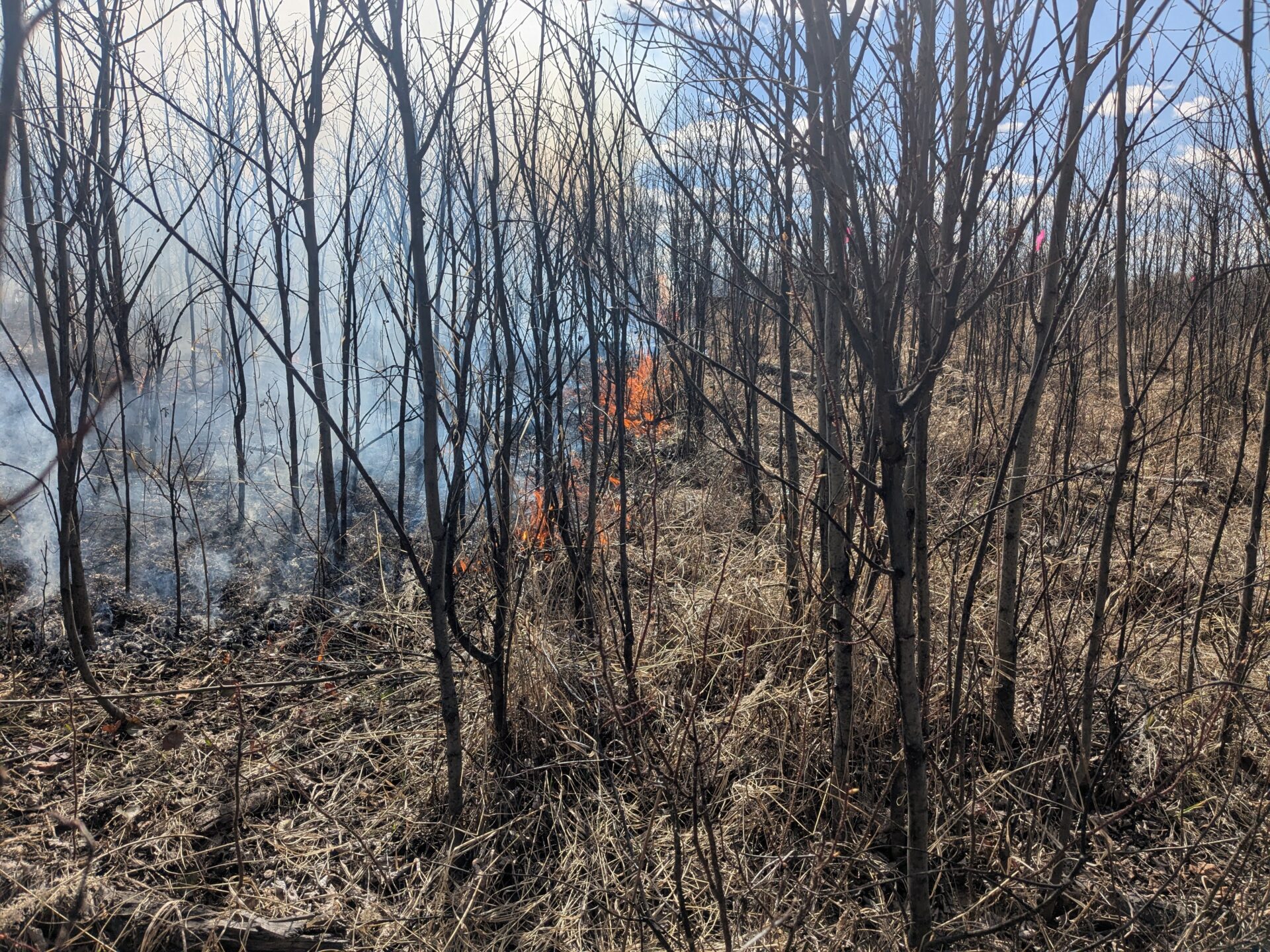
Prescribed fire is a management tool that has the potential to improve the health and functioning of degraded pastures, and to remove hazardous fuel build-up and reduce wildfire risk. Prescribed fire is also part of Indigenous practices, often described as cultural burning, in support of food forests and food sovereignty. However, there are also concerns around fire use and potential changes to soil carbon stocks.
This Project will implement a prescribed fire plan on pastures in the Peace Region of British Columbia, an agriculturally diverse and important region in Canada.
WHAT will this project do: Evaluate how forage production and nutrition responds to prescribed fire and grazing practices, along with soil chemical and microbial properties (in particular carbon storage and cycling).
WHERE will it take place: This research will occur at four locations on private and Crown land (such as the Bear Mountain Community Pasture) in both north and south Peace Regions. Each project site will implement a pre-approved prescribed fire plan to follow all steps for safe and lawful burning.
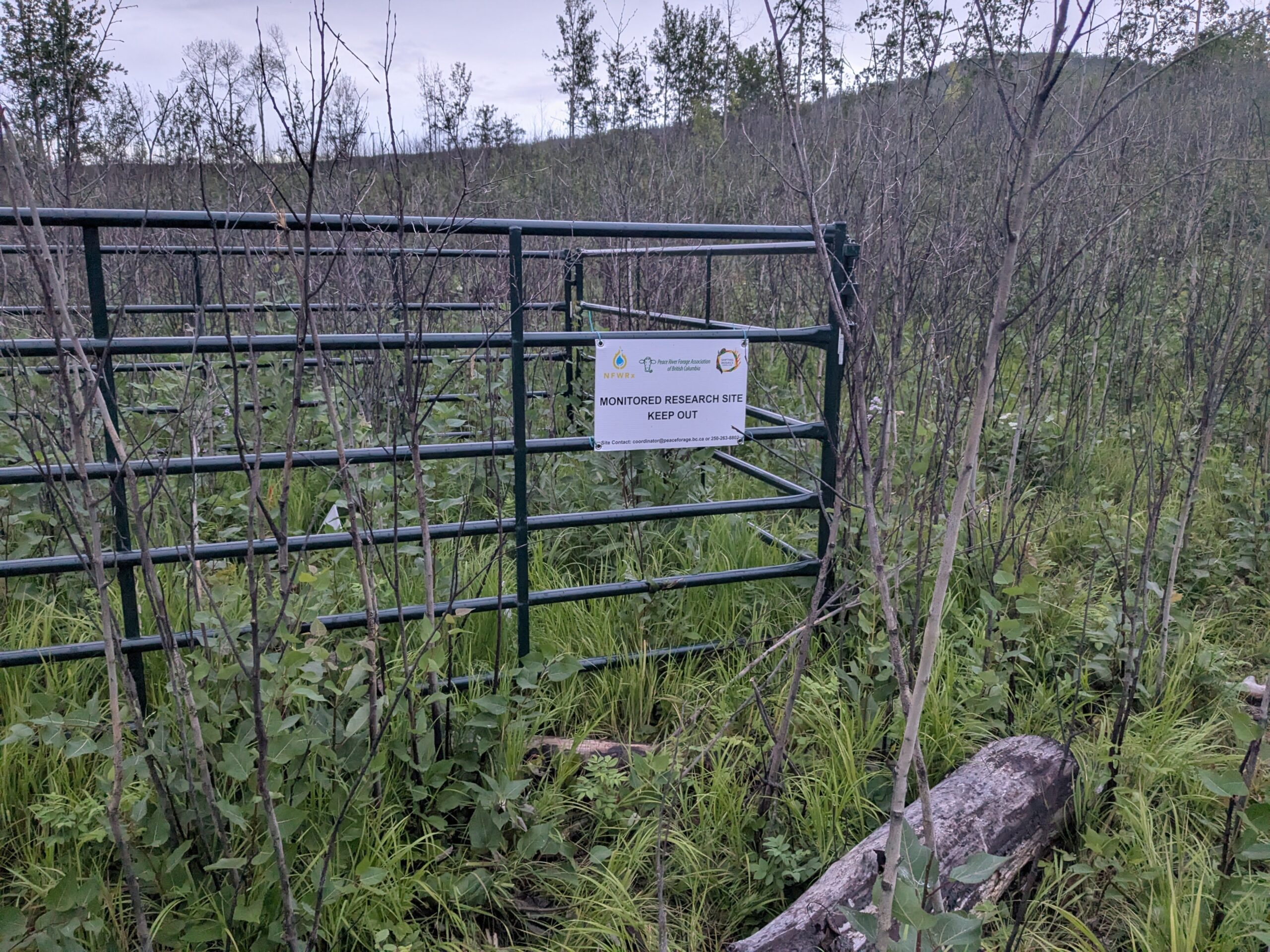
HOW will it be done: Treatments will include burning and grazing, resulting in four comparisons: (1) unburned/ungrazed, (2) unburned/grazed, (3) burned/ungrazed, and (4) burned/grazed. Soil and forage will be compared between paired burned and unburned areas. Grazing exclosures allow for comparisons between grazed and ungrazed areas, with the treatment layout varying by site. Soil sampling will occur approximately two weeks, five months, one year amd two years after prescribed fire. Forage surveys will take place during the summer. Pre-fire sampling plans will be adjusted because of frozen soil, dormant vegetation and logistical constraints.
WHY is it needed: This research will (a) provide important information to producers seeking pasture rejuvenation through prescribed fire, and (b) generate data to understand the impact of prescribed fire on soil carbon. This information will be essential for ranchers to make informed decisions and potentially improve the adoption and approval process for prescribed fire.
SITE DESCRIPTIONS:
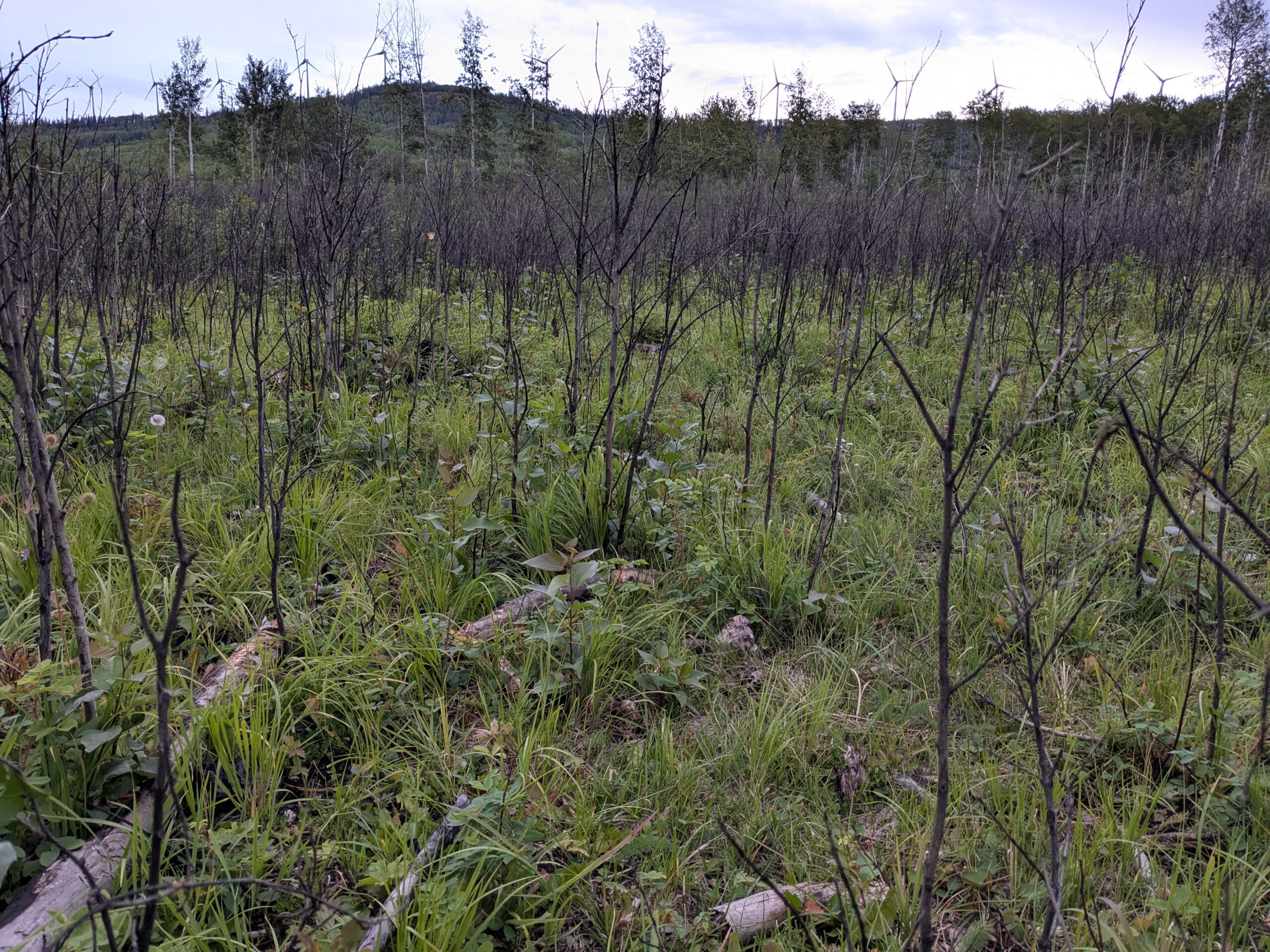
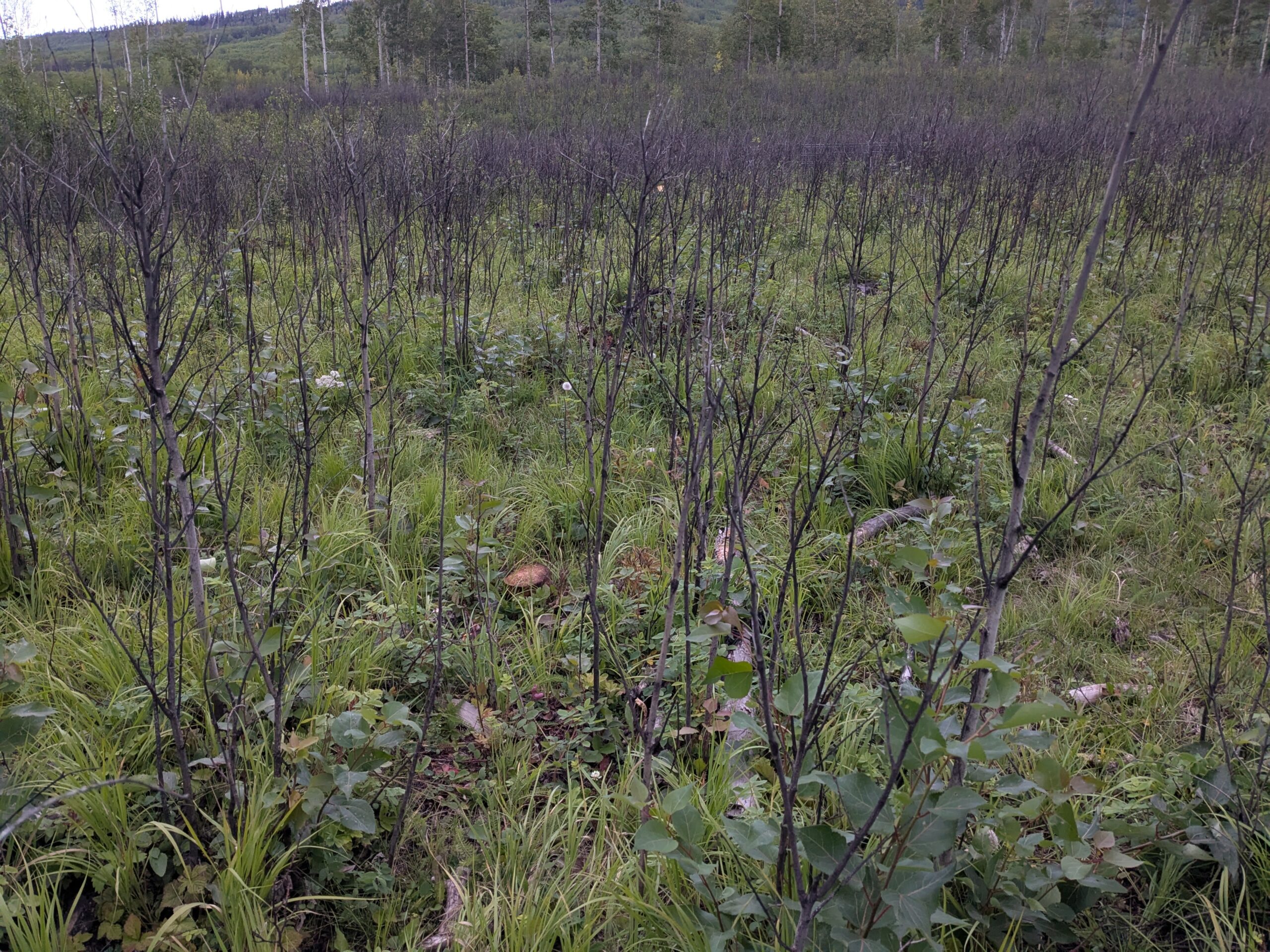
- Bear Mountain Community Pasture, near Arras BC: The area used for the prescribed fire trial was logged for aspen approximately five years before the 2025 burn. Dense aspen regrowth had reduced cattle access to forage.
- Ardill Ranch (Renee Ardill), near Hudson’s Hope BC: This site was chosen as a pasture with moderate fire history and some brush encroachment. Land steward has longer term experience of using prescribed fire as a pasture management tool.
- Thiessen Bros Ranch (Jack Thiessen), near Buick BC (Aitken Creek): This site was chosen as a field with some regular fire history. Land steward has longer term experience of using prescribed fire as a pasture management tool. This site is also of interest to the Blueberry River First Nations.
- Peace River Ranch, on the Lower Cache Road BC: This silvopasture site, with brush encroachment and accumulation of woody debris build up, is grazed by plains bison.
PRELIMINARY RESULTS
These are early observations. Analysis is ongoing, and the findings should not yet be treated as final conclusions or management recommendations.
Forage
Forage biomass was greater in burned areas than in unburned areas at all four sites in the first summer following fire. This pattern persisted at Thiessen one year after fire, while the second-year results at Ardill were more variable.
Forage fibre measurements—acid detergent fibre and neutral detergent fibre—were generally slightly lower in burned areas. Peace River Ranch showed no clear difference in these measurements in the first summer after fire.
In the 2024 samples, phosphorus was higher in burned areas, and calcium was slightly higher at one site. Crude protein and iron appeared lower. The research team is examining whether differences in plant species composition help explain these patterns.
Soil
Initial results from the Ardill and Thiessen sites, approximately two weeks after their 2024 burns, showed no clear difference in soil pH between burned and unburned areas. Available nitrogen may have increased slightly in the upper five centimetres of soil, but further analysis is needed to determine whether this difference is statistically significant.
The effect of fire on soil microbial biomass remains unclear. Laboratory work and analysis continue, and conclusions about soil carbon storage are not yet available.
Presentations and Media Coverage
- Jillian Bainard — Cattle Industry Development Council AGM, June 6, 2024.
- Sonja Leverkus and Nadia Mori — presentations to the BC Institute of Agrologists, NEBC Petroleum Producers Meeting and Canadian Prairies Prescribed Fire Exchange, 2024–25.
- Kristin Korten and collaborators — TRU MSc Showcase presentations in March 2025 and March 2026; IVMA of BC Forum in November 2025; and Kamloops Naturalist Club in November 2025.
- Peace prepares for active fire season — Country Life in BC, May 22, 2024.
- Setting the Peace on Fire on Purpose — Farming in British Columbia, February 19, 2025.
- Sonja Leverkus and Jack Thiessen’s testimony to the Senate Agriculture and Forestry Committee, with a link to the official meeting record.
This project was supported by two Silviculture Innovation Program (SIP) Innovation in Action grants.
Progress
2026 – Research and Knowledge Sharing
All 4 prescribed fires for the project have been completed. Soil and forage analysis continue at Agriculture and Agri-Food Canada’s Agassiz Research and Development Center to assess (a) forage productions, (b) forage quality, (c) soil health and (d) carbon cycling.
Project findings and experiences were sharing through a poster at the Thompson Rivers University MSc Showcase on March 5, 2026 and through the University of Alberta’s prescribed fire course held from January to May 2026. Several project team members also became certified BC Wildfire Service Instructors.
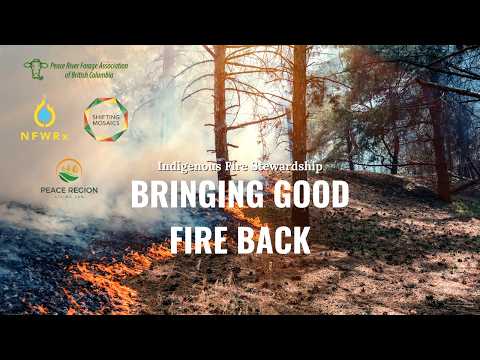
An additional webinar, Indigenous Fire Stewarship: Bringing Good Fire Back, was held on April 17th, 2026. The discussion brought together Indigenous leaders and fire practitioners to share perspectives on cultural fire stewardship and rebuilding capacity to apply good fire.
2025 – Final Two Burns Completed and Monitoring Expanded
Spring
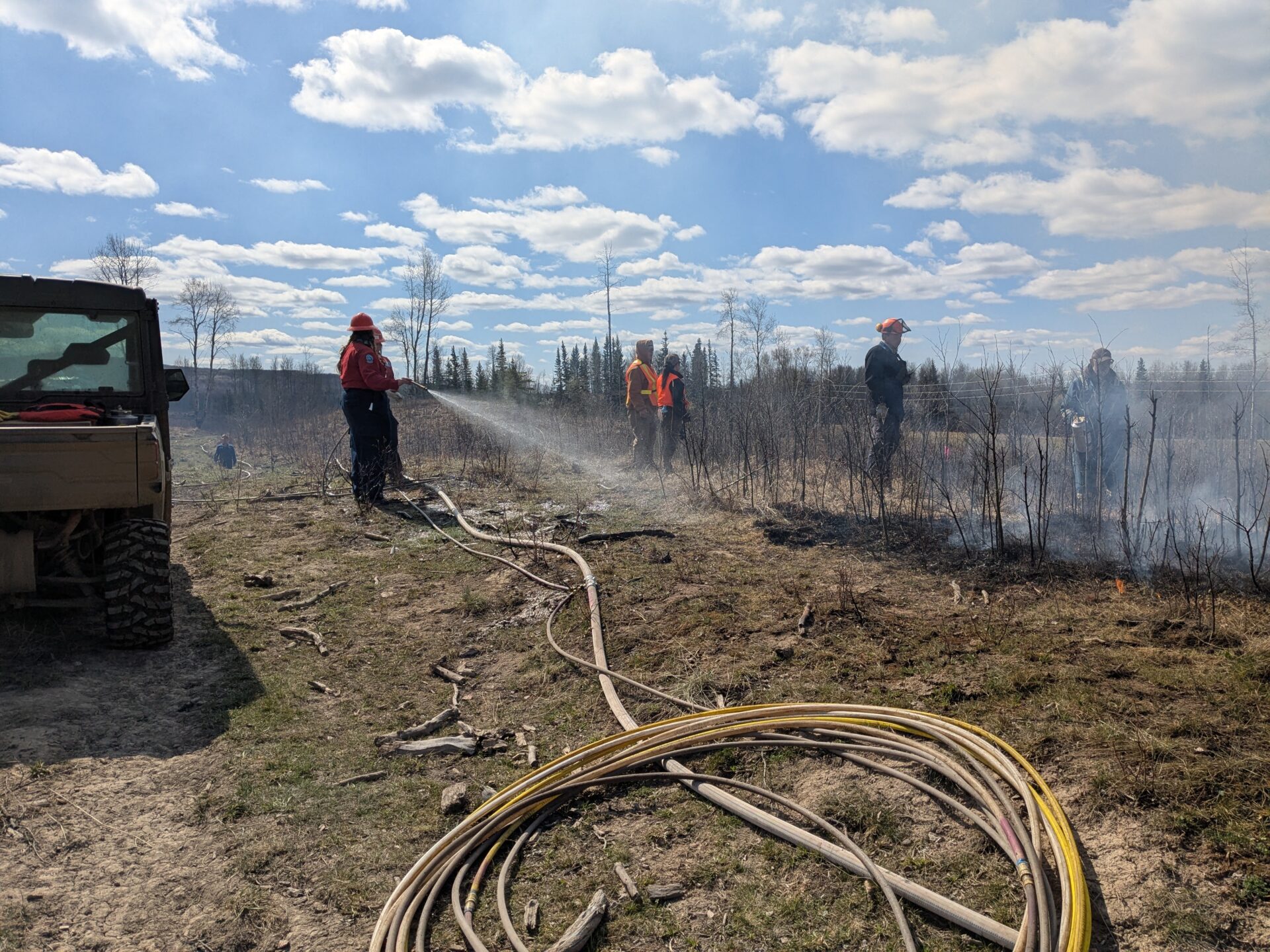
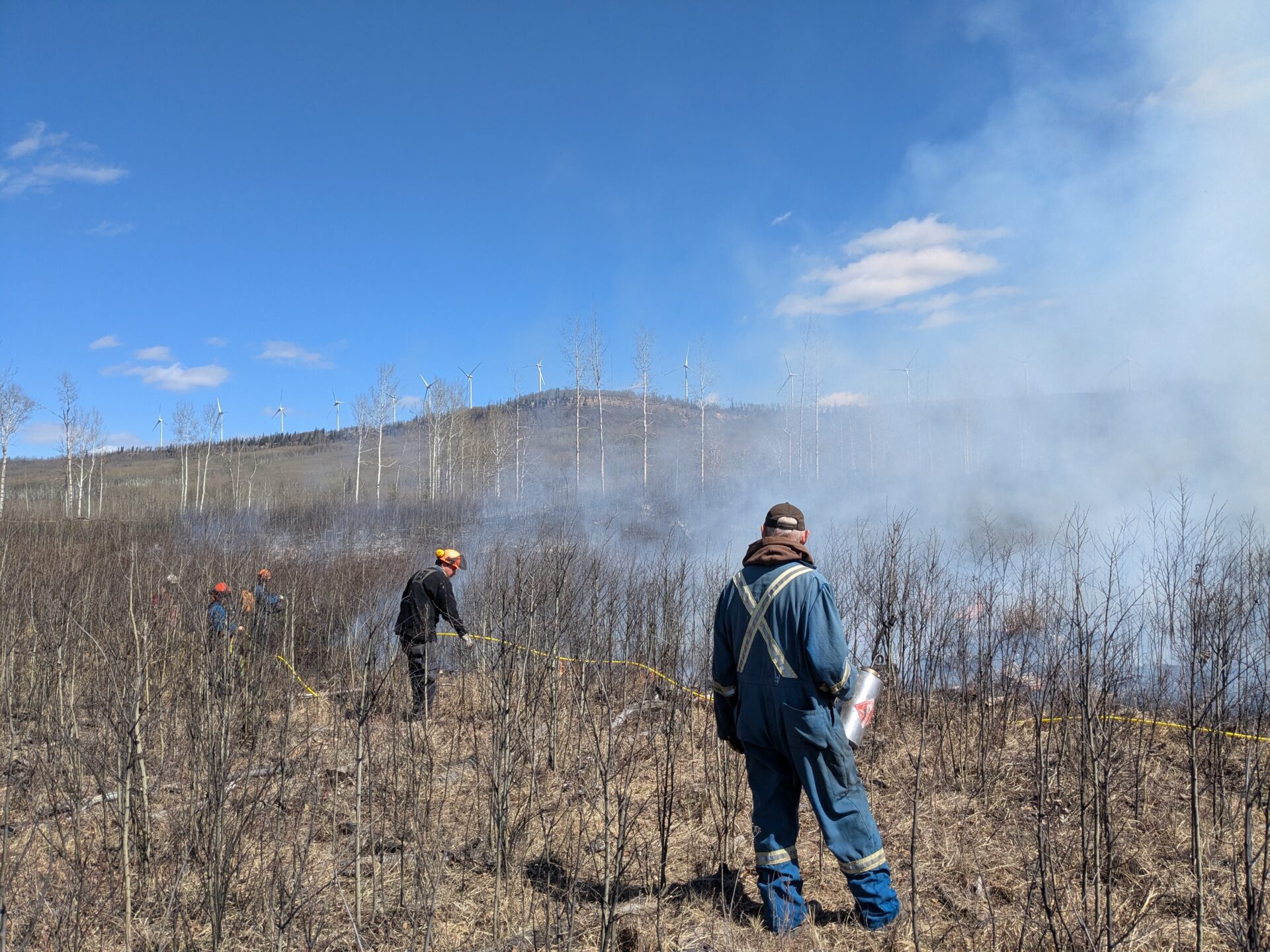
- Prescribed fire was completed at Peace River Ranch near Montney in April and Bear Mountain Community Pasture near Arras in late April/early May. Approximately six hectares were treated at each site.
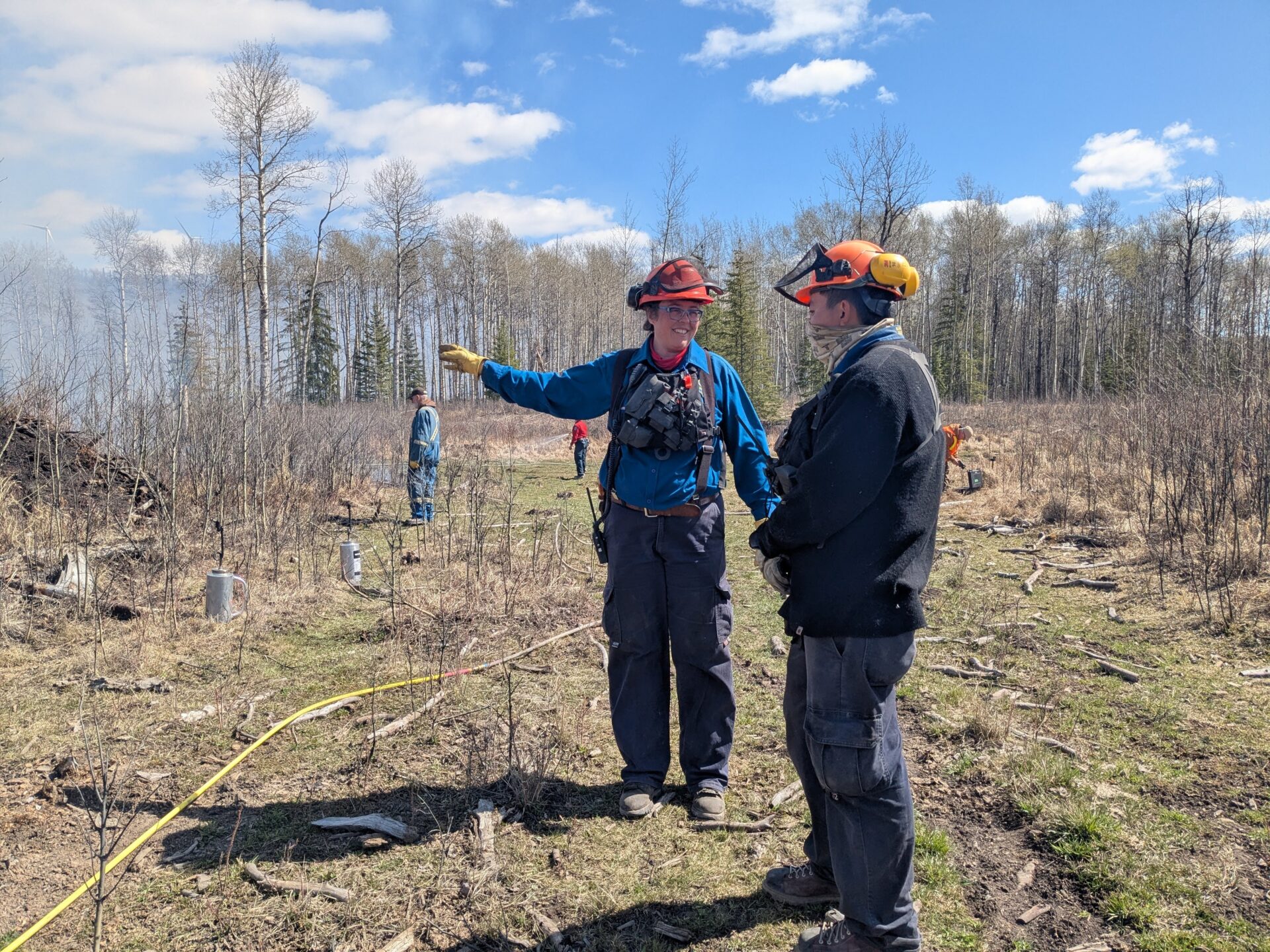
- Crew Leader training at Peace River Ranch involved more than 20 participants and was followed by hands-on prescribed fire experience on pasture grazed by plains bison. Mentorship at both sites helped rancers and community members develop skills in leading prescribed fire operations.
- Crew members from Prophet River First Nations, Blueberry River First Nation and Acho Dene Koe participated in the burns.
- All 4 project burns were completed with the required authorizations, with no escapes and no need to activate contingency plans.
- Grazing exclosures were established at the 2 new sites. Soil was sampled approximately 2 weeks after those burns, and the Ardill and Thiessen sites were samples approximately one year after their 2024 burns.
- The 3-part winter webinar series concluded in February, and the Northeast Range: Prescribed Fire Values Checklist was published in March.
Summer & Fall
- Forage surveys were competed at all 4 sites, measuring plant composition, growth and biomass. These represented the first summer after fire at Peace River Ranch and Bear Mountain and the second summer at Ardill and Thiessen sites.
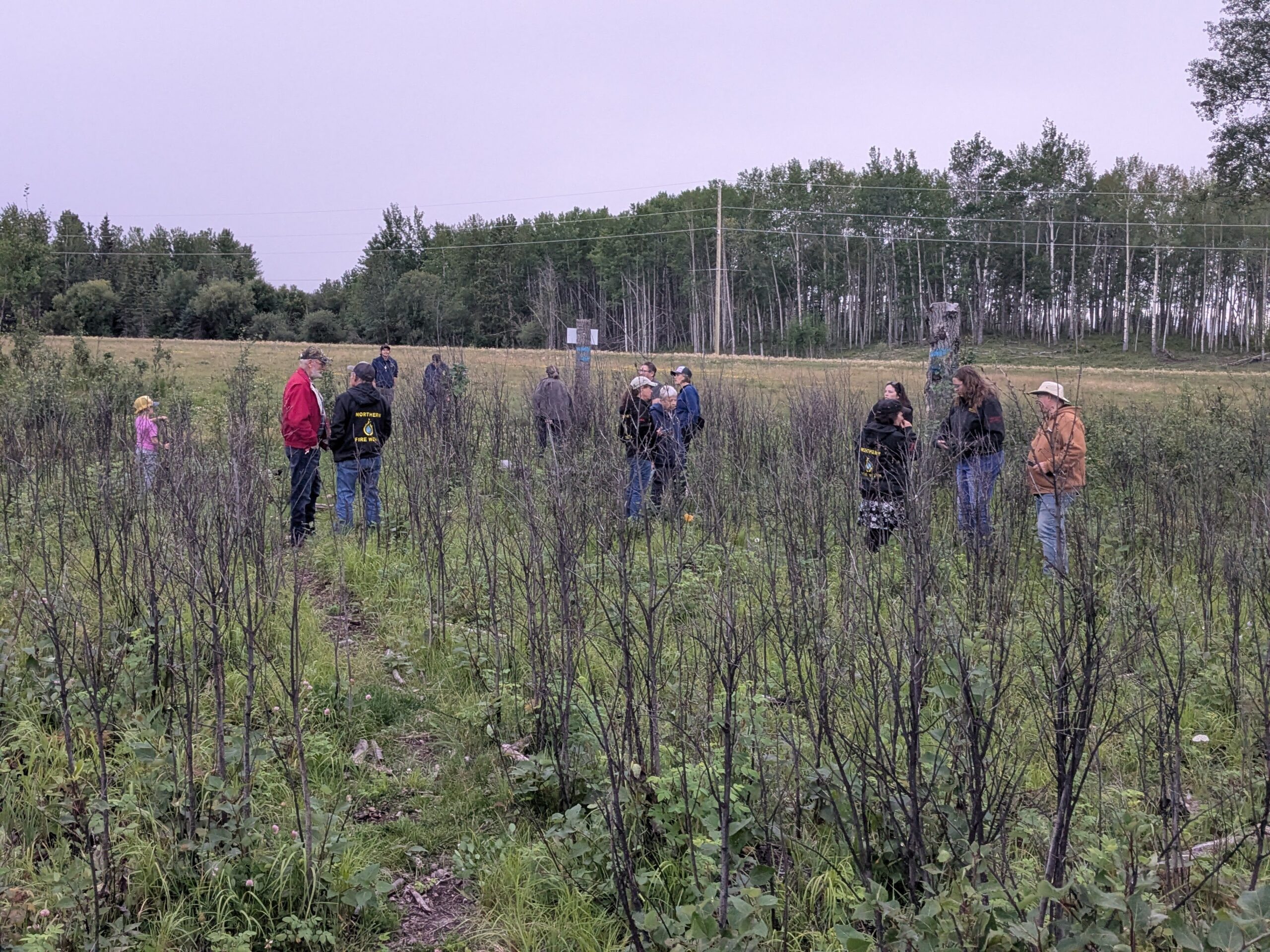
- A pasture walk at Bear Maountain Community Pasture on August 19 brought together approximately 15 participants to discuss forage recovery, aspen regrowth and differences between grazing and ungrazed areas.
- Myth Busters: Prescribed Fire in Northeast BC was published as Forage Fact #123.
- Soil was sampled again at Peace River Ranch and Bear Mountain approximately five months after their burns.
- The Bear Mountain pasture walk featured in the Oct 2025 Forage First newsletter (issue #104).
- Research findings were presented at the Integrated Vegetation Management Association of BC Foroum on November 4-6 and to the Kamloops Naturalist Club on November 20.
2024 – First Two Burns and Montiroring Established
- Prescribed Fires were completed at Ardills Ranch near Hudson’s Hope and Thiessen Bros Ranch near Buick/Aitken Creek in late April/early May. The Ardill work included perimeter blacklines and a 35 acre interior burn; the Thiessen burn covered 74 acres.
- Grazing exclosures and paired burned/unburned sampling locations were established. Soil sampling began approximatly two weeks after the burns, with additional sampling at Thiessen two days after the fire.
- Summer forage surveys measured plant cover, height, species composition and biomass.
- A PRFA Grazing Series tour visited the Thiessen research site on August 13, 2024
- Eleven members of the West Moberly First Nation completed wildfire training through the April 2-5 fire school at Moberly Lake, including S100, S185 and ICS100 training.
- The Thiessen pasture walk featured in the Oct 2024 Forage First newsletter (issue #100).
- The project was featured in the July 2024 Forage First newsletter (issue #99, page 7-8), May 2024 Forage First newsletter (issue #98, page 8) and January 2024 Forage First newsletter (issue #97, page 9-10).
- The remaining burns were delayed by approval requirements and challenging fire conditions. The original Halfway River site was subsequently replaced by Peace River Ranch, where prescribed fire was completed in 2025.
WHAT’S NEXT
The final project year focuses on completing field sampling, laboratory analysis and interpretation of the forage and soil results. Planned resources include:
- Burn, Graze, Grow: A Rancher’s Playbook for Better Forage – drafted and undergoing final edition at the time or reporting.
- A third fact sheet highlighting project findings.
- The short documentary Good Fire and a rancher interview series.
- A scientific paper following the final season of data collection.
Final project reporting is tentatively scheduled for March 31, 2027
BEYOND THE RESEARCH SITES
Beyond our four research sites, we’ve seen growin interest in – and use of – prescrived fire across the region. In, 2025 Blueberry River First Nation completed nine prescrived fires, Thiessen Bros Ranch carried out two additional burns, and training burns took place near Toad River. These activities reflect growing local capacity to put prescribed fire into practice.
Knowledge and tools developed through the project are also reaching new audiences. The BC Ministry of Forests is referencing the project’s checklists and planning processes, and team members have supported the Yukon Wild Sheep Foundation in building its own prescribed fire capacity.


Project Cooperators
- Bear Mountain Community Pasture
Arras, BC - Ardill Ranch (Renee Ardill)
Hudson's Hope, BC - Thiessen Bros Ranch (Jack Thiessen)
Aitken Creek Road, Buick, BC - Peace River Ranch
Peace River Ranch Arena, Lower Cache Road, Montney, BC
Maps

Project Contacts
- Nadia Mori
PRFA Coordinator
250-263-8802
coordinator@peaceforage.bc.ca - Dr. Sonja E. R. Leverkus PhD RPBio RPF PAg EP
Lead Researcher
(250) 321.7069
sonja@shiftingmosaics.com - Dr. Jillian Bainard
Lead Researcher, AAFC
jillian.bainard@canada.ca
Funding & Industry Partners




Factsheets & Documents
Forage First Articles
- FF_97_New Funding to Evaluate Prescribed Fire_2024Jan_pg9 10
- FF_98_April2024Update_Rx Fire Project_pg8
- FF_99_July2024Update_Rx Fire Project_pg3
- FF_99_Data Collection on Sites_2024July_pg7,8
- FF_100_Oct2024Update_FireWagon1,RxFireProject_pg5
- FF_100_AUG Grazing Series visits Prescribed Fire Site_2024Oct_pg15
- FF_101_2024Summary_Rx Fire Project_pg9 10
- FF_104_AUG Grazing Series visits Prescribed Fire Site, BMGA_2025Oct_pg14