Events

- This event has passed.
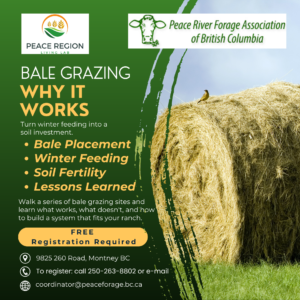
Bale Grazing and Why It Works
Turn Winter Feeding Into a Soil Investment
Tuesday, August 18 | 7:00–9:00 PM
Collins Cattle Co. Montney BC
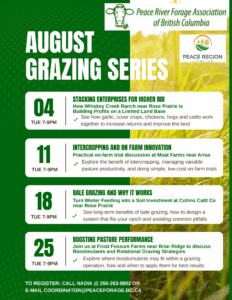
Part of the PRFA August Grazing Series
What if winter feeding could do more than just feed cattle?
Join the Peace River Forage Association at Collins Cattle Co. for an evening in the field with Aaron and Sherri Collins, exploring more than a decade of experience with bale grazing.
We’ll visit a series of bale grazing sites and talk about what years of putting the practice into action have taught them — where bale grazing fits, how to set up a system that works for your ranch, and some of the common pitfalls worth avoiding.
Whether you’re considering bale grazing for the first time or have been doing it for years, this evening is an opportunity to compare notes, ask questions and see the longer-term results firsthand.
What we’ll explore
More than a decade of bale grazing
Aaron and Sherri have years of experience implementing bale grazing on their operation. We’ll visit bale grazing areas of different ages and discuss what they’ve learned along the way — including what has worked well and what they would do differently.
Turning winter feeding into a soil investment
Winter feeding brings nutrients onto the landscape through manure, urine and leftover feed. With thoughtful bale placement, those nutrients can be concentrated in areas where they can contribute to future forage production and soil fertility.
We’ll look at what that can mean on the ground and discuss how bale grazing can make winter feeding part of a longer-term pasture management strategy.
Finding a system that fits your ranch
There isn’t one bale grazing setup that works for every operation.
We’ll talk about practical considerations such as bale placement, cattle access, winter conditions, water, fencing, feeding logistics and choosing appropriate areas for bale grazing.
The goal isn’t to copy someone else’s system — it’s to understand the principles well enough to build a system that works for your own ranch.
Avoiding the common pitfalls
Bale grazing can provide significant benefits, but placement and management matter.
We’ll discuss lessons learned from years of experience, including situations where too much residue or nutrient concentration can become a problem, and practical ways to reduce the risk of unintended impacts.
What happens after the cattle leave?
One of the advantages of visiting established bale grazing sites is being able to look beyond the winter feeding period.
We’ll walk a series of sites and look at how the areas have responded over time, providing an opportunity to discuss forage response, nutrient distribution, residue and what producers should watch for in the seasons following bale grazing.
This evening is for you if…
You’re considering bale grazing and want to know how to get started. You’re already bale grazing but want to improve your system. You’re looking for ways to reduce winter feeding labour while making better use of nutrients. You’re interested in building soil fertility through livestock management. Or you simply want to see what more than a decade of bale grazing looks like on a working Peace Region ranch. Both new and experienced bale grazers are welcome.
Registration Required – RSVP below for FREE
Call 250-263-8802 or e-mail coordinator@peaceforage.bc.ca
LOCATION:
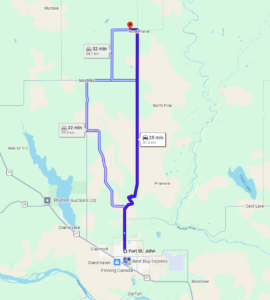
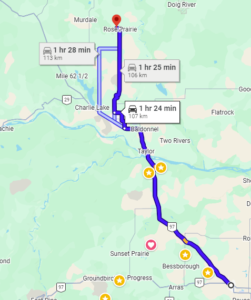
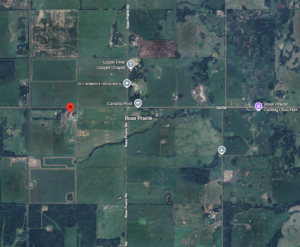
9825 260 Rd (Mason Road), Montney BC
25-35 min drive from FSJ (31-36km)
1 hr 24-28 min drive from DC (106-113km)
Come with your questions:
- One of the goals of the August Grazing Series is to create opportunities for producers to learn directly from one another.
- We’ll walk the field, compare experiences, and leave plenty of time for questions and discussion.
- Bring your questions for Aaron and Sherri